SHAPE LANGUAGE IN CHARACTER DESIGN
- Jonathan Whittingham

- May 17, 2020
- 6 min read
Updated: May 21, 2020
The video from Chelsea Gracei went in depth about how shape language is used to create characters in illustration. She explained that certain characters in animation and illustration are portrayed in a certain way because of the shapes that build them up.
Square
Some of the traits associated with the square is that it is strong. In the character design it could come across as a physical strength, mental strength (highly intelligent) or emotional strength. A square is also study, resilient, grounded and unmoving.
The negative traits of this shape could be that they are dull or boring, they are static, the character could be stuck in the past and set in their ways, not willing to adapt or step outside the box.
As you can see, the shape language of the old man from Up, is made up of mostly squares even down to the shape of his glasses. This was to show that the character is strong headed and very set in his ways.

Triangles
With triangles they are usually associated with the villain as they represent danger or sharp edges. They can show a character who is dynamic, active or spontaneous. They can also be very driven, motivated and expressive.
They could be harsh or sharp in the personality, they could be very straight to the point or hurtful. They can also portray a sense of imbalance, unlike circles and squares they have sides that are shorter than others. In a character this could show that they might have a short temper or can't handle their emotions properly.

Circles
Circles and curves in a character can come across as innocent and cute. They can create a softness, they could have a welcoming personality or evoke happiness and kindness. They are usually used for the protagonist in a story, but this shape is not limited to just the hero. It can also show a character who is pliable or has a lot of potential, they don't have the hard lines like a square or triangles so could be adapted.
Circles could also show a character as being a bit of a coward or spineless. They may not have figure out what they believe in or make a stance. It could show a character that is gullible or easily manipulated because of the pliable form.

These concepts are basically the building blocks of character design. When creating more complicated characters, you can combine these shapes to create new shapes.
Build a Fantasy Character with Shape Language
Brian Shepard is a 2D Game Artist and Illustrator who made a lesson on building a character based around the use of shape language. He goes in depth about how shapes are used to express emotions in the body and in facial expressions. They are also used to make assumptions about a character at first glance and he also talks about how the silhouette is important to clearly show.
First impressions

When we see a character like this (the picture above) we automatically perceive him as evil. That is because the use of sharp edges and angular features make him seem like a threat. With the helmet the way that it is shaped makes it seem like he is scowling at us, and with the mouthpiece because it tapers down at the sides it gives the impression of a frown. Shape language is all about telling the viewer a story without using any words or description. This character could also be a really nice character without knowing, but this method can also be used to subvert our expectations as much as reinforce them.
Silhouettes
"Silhouettes are the most important part of a characters visual design" (Brian, 2015)
This is something that stuck out to me because when I was designing my character I barely worked on the silhouette and with thinking about this concept I want to use silhouettes as my base when designing characters and try out multiple designs before committing to one.
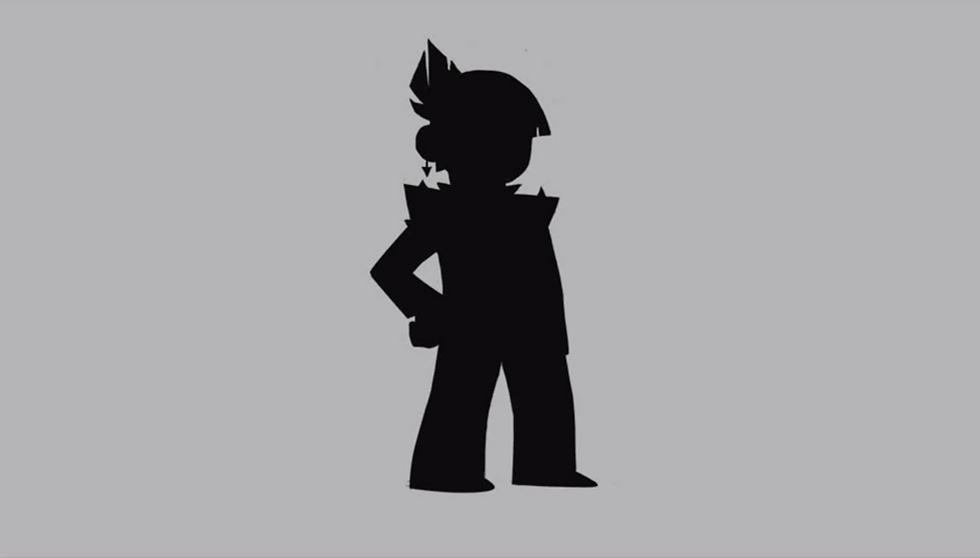
The silhouette doesn't just apply to their overall body shape, it can also relate to their features so that the character is easier to remember.
The character below seems like a younger person who has a bit of an edgy attitude. I made that assumption based on the height and shapes used in the design.
Minor Features
Below is an illustration of Mandy, she is a character from Cartoon Network. She is a grumpy little girl and her body is basically made up of a circle for the head and a square for her body. The left image is her original look, her hair is pointed at the top that represent horns and her fringe is sharp. However the image on the right is altered to make her hair a lot rounder. Even though she still looks angry, doing this makes her look a lot less threatening and changed how we perceive the character. Techniques like this can change the whole message of a character in such a simple way.


If we take a look at Sonic the Hedgehog, his signature trait is the three quills on the back of his head, these act like speed lines for the audience to show that he is dynamic and fast. It also shows that he has a sense of attitude and drive. Looking closely at the original (blue square) we see that the quills are rounded off at the edges. If they were too sharp he comes across as too aggressive, and if that are too round like in the third image his speed and attitude fall flat. Also if we flip that way the quills are facing, it totally changes the way that he is portrayed and it doesn't have that dynamic edge that Sonic is known for.
Curves and Angles


Curves are mainly used to enhance feminine features whereas angles are used to show masculine features. However there is no reason that these traits can't be changed or altered depending on the gender. The fun thing about character design is that it's all about experimentation and you don't have to stick to the stereotypical rules, just use them as a guideline.
Creating a Character
When creating a character some of the initial steps will be to firstly, figure out the main shape that will be used in the design. The character doesn't have to just be fully made up of a square or circle as their design but make the majority of the design that shape. The next part is to figure out what their occupation is. This doesn't have to be an official job but something that shows who they are overall, such as an archer, magician, pirate or even mythical creature. Afterwards add one or two more traits to describe something about their attire or traits they might have, it could be things like zebra, lightbulb or fiery.
Brian used the triangle shape combined with the words thief, padlock and fox. He started to gather references and images of things to do with these words and came up with some thumbnail ideas that he wanted to try out. Not all of them were successful ideas but that is a part of the process, it's all about trial and error.


He then was able to narrow down his ideas and used a human female to have the traits of a fox. For example using the fox tail as her ponytail, the black boots and gloves as the fox paws and a white bandana to represent the white strip underneath the foxes muzzle. He also used the padlock as a bag for her stolen items.

I think it's genius how he used these simple traits and words and was able to make a character from it. This has shown me that character design doesn't have to be complicated if I have the right tools to work with. Shape language, silhouettes and minor traits are something that I am going to look further into in the future when designing characters. I believe that they are important concepts for character design and look forward to improving my skills in this area.

Reference:
Gracei, C. (2020) How to Use SHAPES to Create Character Designs Shape Language Tutorial. [Online Video]. 14 February 2020. Available at: https://www.youtube.com/watch?v=GbG45s1EZvo. [Accessed: 17 March 2020].
Shephard, B., 2019. Build a Fantasy Character with Shape Language. [online] Available at <https://www.skillshare.com/classes/Build-a-Fantasy-Character-with-Shape-Language/1847675962/projects?via=search-layout-grid> [Accessed 17 March 2020]


Comments